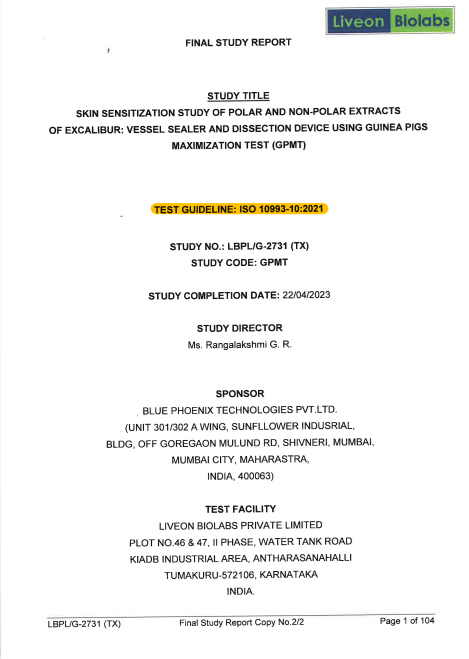
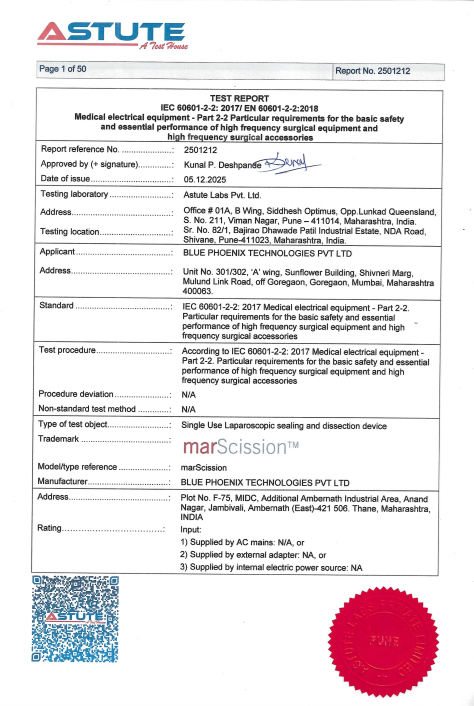
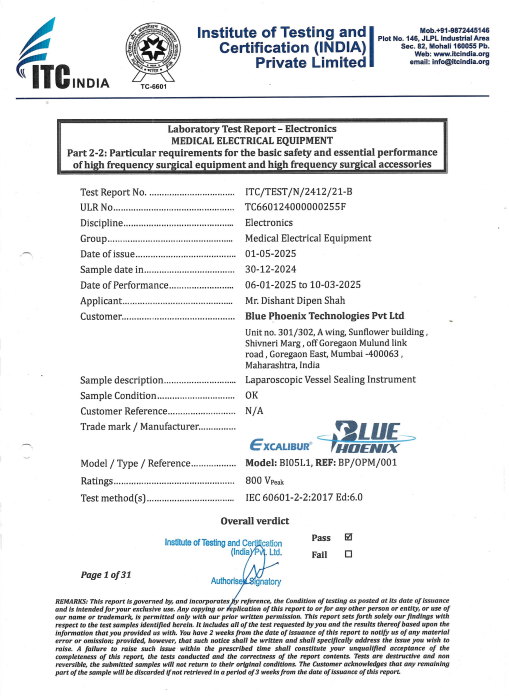
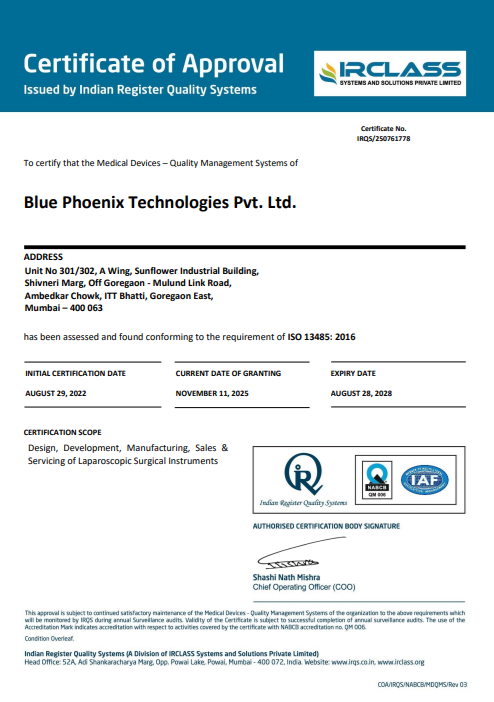
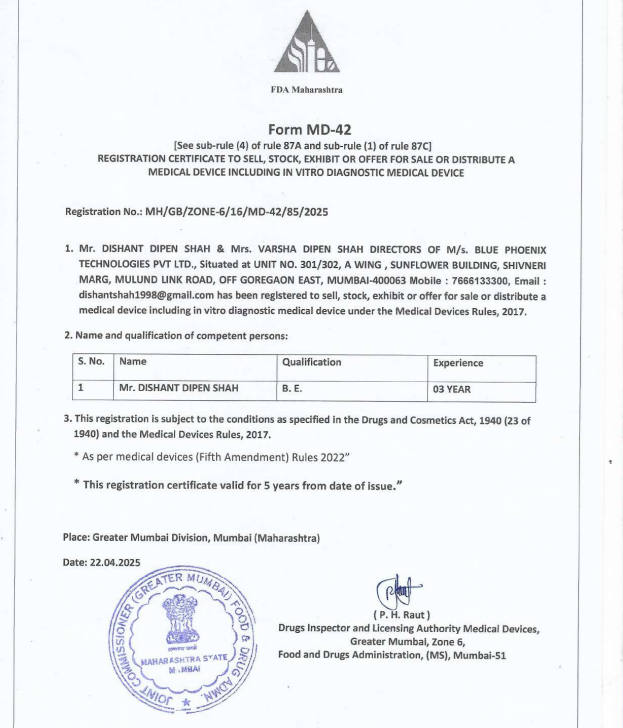
BluePhoenix Medical Technology Pvt. Ltd. is a pioneering medical equipment and accessories manufacturer and distributor headquartered in Mumbai, India. Since our founding in 2021, we have focused on creating high-quality, precision-engineered medical instruments — particularly in laparoscopic and minimally invasive surgery — designed to meet the evolving needs of modern healthcare professionals. We are committed to advancing patient care by offering innovative surgical tools that are reliable, ergonomic, and performance-driven
About me
BluePhoenix Medical Technology Pvt. Ltd. is a pioneering medical equipment and accessories manufacturer and distributor headquartered in Mumbai, India. Since our founding in 2021, we have focused on creating high-quality, precision-engineered medical instruments — particularly in laparoscopic and minimally invasive surgery — designed to meet the evolving needs of modern healthcare professionals. We are committed to advancing patient care by offering innovative surgical tools that are reliable, ergonomic, and performance-driven
Innovation with Purpose: Develop medical devices that incorporate smart design, functional excellence, and clinical insights.
Quality You Can Trust: Ensure consistent quality through strict manufacturing standards and rigorous testing.
Safety First: Prioritize the safety and well-being of patients and surgical teams in every product we design.
Global Collaboration: Expand our reach through trusted distributor partnerships and strategic collaborations.
About the company and certificates
A paragraph is defined as “a group of sentences or a single sentence that forms a unit” (Lunsford and Connors 116). Length and appearance do not determine whether a section in a paper is a paragraph. For instance, in some styles of writing, particularly journalistic styles, a paragraph can be just one sentence long. A paragraph is defined as “a group of sentences or a single sentence that forms a unit” (Lunsford and Connors 116).
BluePhoenix Medical Technology demonstrates strong technical expertise through its association with patented surgical technology, including innovations referenced under international patent WO2017130214A1, registered for both in USA and Europe, relating to advanced electrosurgical and vessel sealing mechanisms, non-stick biocompatible coatings and multi-functional jaw geometries. This patent-backed foundation reflects our commitment to original engineering, validated design concepts, and clinically driven innovation, reinforcing BluePhoenix’s position as a technically capable and forward-looking medical technology company.
Our Reach & Partnerships
BluePhoenix has established strong relationships with distributors throughout India, delivering products to hospitals, clinics, and surgical centers. As we grow, we continue working to expand our footprint and bring high-quality medical solutions to new markets. Markets: India, U.A.E., Africa, Europe
BluePhoenix Medical Technology demonstrates strong technical expertise through its association with patented surgical technology, including innovations referenced under international patent WO2017130214A1, registered for both in USA and Europe, relating to advanced electrosurgical and vessel sealing mechanisms, non-stick biocompatible coatings and multi-functional jaw geometries. This patent-backed foundation reflects our commitment to original engineering, validated design concepts, and clinically driven innovation, reinforcing BluePhoenix’s position as a technically capable and forward-looking medical technology company.
Our Reach & Partnerships
BluePhoenix has established strong relationships with distributors throughout India, delivering products to hospitals, clinics, and surgical centers. As we grow, we continue working to expand our footprint and bring high-quality medical solutions to new markets. Markets: India, U.A.E., Africa, Europe
In publishing and graphic design, Lorem ipsum is a placeholder text commonly used to demonstrate the visual form of a document or a typeface without relying on meaningful content. Lorem ipsum may be used as a placeholder before final copy is available